The short version
| Himalayan 450 | Classic 350 | |
|---|---|---|
| Engine | 452 cc liquid-cooled single, about 40 hp | 349 cc air-cooled single, about 20 hp |
| Weight (wet) | About 196 kg | About 195 kg |
| Seat height | 825 mm (805 mm low setting) | 805 mm |
| Suspension travel | 200 mm front and rear | 130 mm front, 90 mm rear |
| Wheels | 21 inch front, 17 inch rear, tube-type dual-purpose tyres | 19 inch front, 18 inch rear, road tyres |
| Fuel tank | 17 litres, about 400 km range | 13 litres, about 400 km range |
| Best at | Gravel, water crossings, altitude, long days | Tarmac, towns, relaxed cruising, riders who want the classic look |
| Our routes | Ladakh, Spiti, Zanskar, Sach Pass, Nepal, Bhutan, North East | Rajasthan, South India, Golden Triangle rides, Heritage Himachal |
Himalayan 450 on the mountain routes
The 450 replaced the old 411 in our fleet because it solves the two problems riders had at altitude: power loss and heat. The liquid-cooled engine keeps pulling above 5,000 m, where the old air-cooled bike was breathless, and it does not overheat in slow river-crossing traffic behind trucks.
- Gravel and water crossings: long-travel suspension and a 21-inch front wheel; you can stand on the pegs comfortably.
- Riding position: upright, wide bars, big tank to grip with your knees. Riders over 185 cm find it the more comfortable of the two.
- Weight: the same as the Classic, but carried higher. Short riders should use the low seat setting; we set it up before you arrive.
- Luggage: factory-fit pannier frames and a rear rack; we fit soft panniers and a tail bag. Your main bag travels in the backup vehicle.
- Riders used to big adventure bikes (GS, Tiger, Africa Twin) find it small and easy, which is exactly what you want on a Himalayan trail at 4,500 m.
Classic 350 on the highway tours
On the Rajasthan, South India and Heritage Himachal tours the roads are tarmac, the days are 150 to 250 km, and the towns are the point. The Classic 350 suits this: low seat, relaxed geometry, an engine note that turns heads in every village, and enough power for 80 to 100 km/h cruising.
- Comfort: a plush seat and gentle vibration; good for riders who have not toured for a while.
- Handling: slower steering and less ground clearance than the Himalayan. Fine for the routes we use it on; wrong for gravel.
- Brakes: dual-channel ABS on the current model, which matters on dusty highway braking.
- Luggage: a rear rack and soft saddlebags.
How we allocate bikes
Every mountain tour is on the Himalayan 450. On highway tours the default is the Classic 350, and riders who prefer the Himalayan can ask for it at booking. All bikes are fitted with crash guards and panniers, serviced before every departure, and ridden by the mechanic before the group arrives. A spare Himalayan travels in the backup vehicle on every tour.
What to bring, whichever bike
- Your own helmet if possible; we provide helmets but fit is personal.
- Armoured jacket and trousers (textile with removable liners), waterproof over-layer, gloves and over-the-ankle boots.
- A tank bag or small backpack for the day; everything else goes in the vehicle.
- Full kit list on the motorcycle trip essentials page.
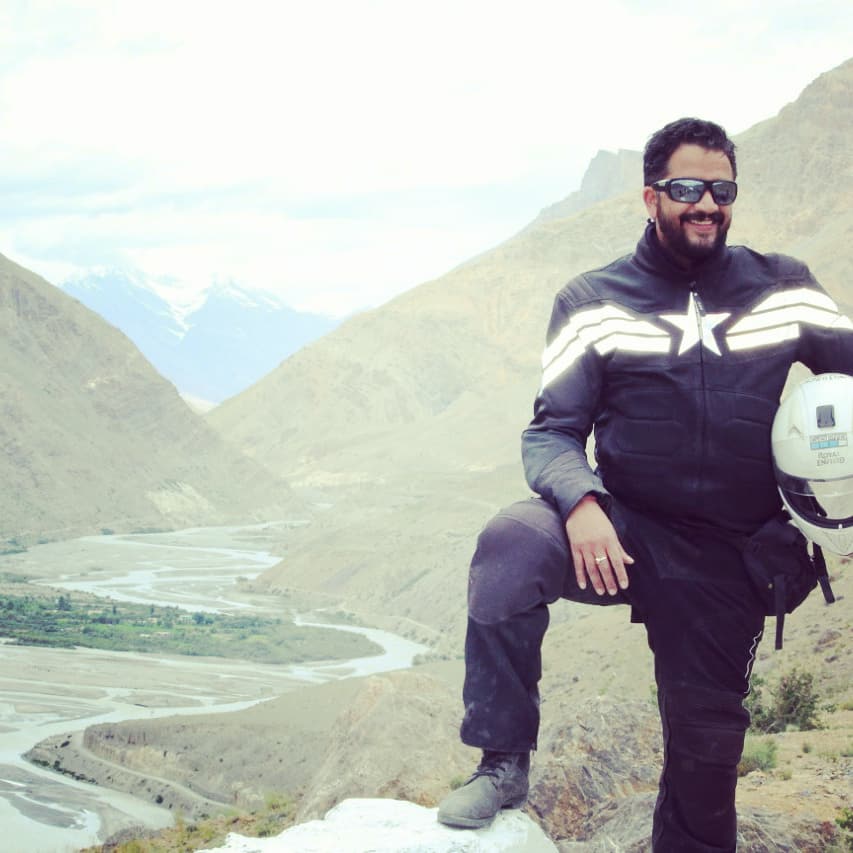
Rajesh Kumar founded Brahmand Tour in 2015 after 15 years of travelling India and has led Royal Enfield groups over every major Himalayan pass. About the team.