
We value your privacy
We use cookies to enhance your browsing experience, serve personalized ads or content, and analyze our traffic. By clicking "Accept All", you consent to our use of cookies.
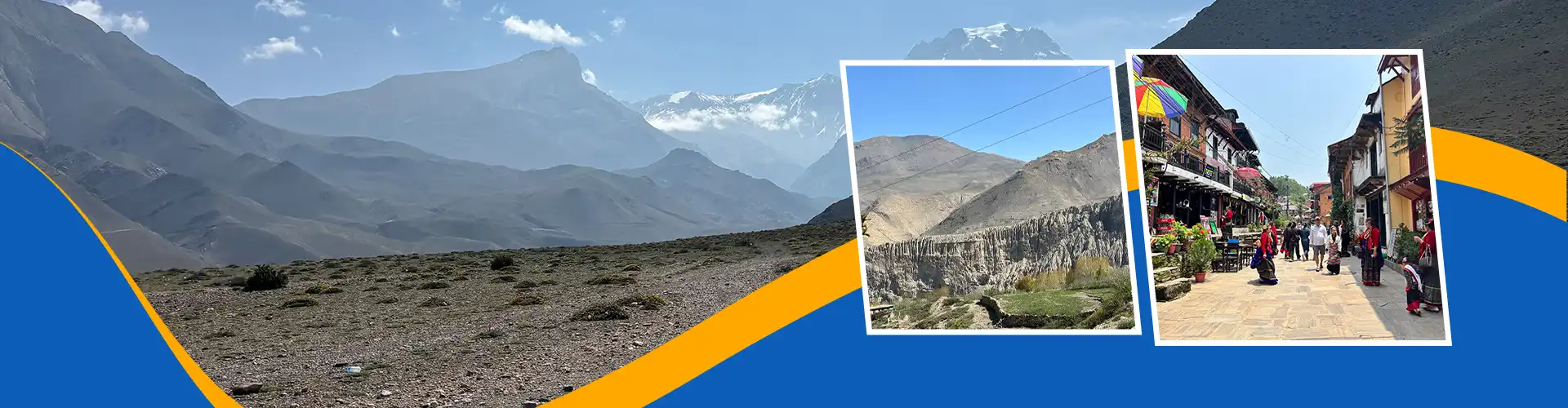
Nepal, nestled in the heart of the Himalayas between India and China, is one of the world's most extraordinary travel destinations. Home to eight of the world's fourteen highest peaks-including Mount Everest (8,848 m)-Nepal offers an unparalleled blend of dramatic mountain scenery, ancient Hindu and Buddhist culture, warm hospitality, and thrilling adventure. From the bustling streets of Kathmandu's Durbar Square to the serene lakes of Pokhara and the remote trails of Mustang, Nepal rewards every type of traveller.
| Detail | Information | Notes |
|---|---|---|
| Capital | Kathmandu | Also the largest city |
| Official Language | Nepali | 100+ ethnic languages spoken |
| Religion | Hinduism (81%), Buddhism (9%) | Highly syncretic culture |
| Time Zone | NPT (UTC+5:45) | Only 45-min offset in Asia |
| Country Code | +977 | IDD access code: 00 |
| Emergency | 100 (Police), 101 (Fire), 102 (Ambulance) | Tourist Police: 1144 |
| Internet TLD | .np | |
| Electricity | 230V / 50Hz | Type C/D/M plugs | Bring adaptor |
Nepal welcomes tourists with one of the most traveller-friendly visa regimes in South Asia. Most nationalities can obtain a visa on arrival or apply in advance online.
Visa on Arrival is available at Tribhuvan International Airport (Kathmandu) and major land border crossings including Birgunj, Belhiya, Kakarbhitta, Kodari, Rasuwagadhi, Dhangadhi, Nepalgunj, and Bhairahawa.
| Duration | Fee (USD) |
|---|---|
| 15 days (single entry) | USD 30 |
| 30 days (single entry) | USD 50 |
| 90 days (multiple entry) | USD 125 |
Travellers can apply for a Nepal e-Visa online at the official Department of Immigration portal (https://nepalimmigration.gov.np) at least 15 days before travel. The approved e-Visa is printed and presented upon arrival.
Visas can be extended at the Department of Immigration in Kathmandu or Pokhara. Extensions are granted in 15-day increments up to a maximum of 150 days per calendar year. Fee: USD 3 per day (minimum USD 45).
Citizens of India do not require a visa to enter Nepal. Citizens of certain countries in South Asia may have different arrangements-always verify with the nearest Nepali embassy before travel.
The official currency of Nepal is the Nepalese Rupee (NPR / Rs). Banknotes are issued in denominations of Rs 1, 2, 5, 10, 20, 25, 50, 100, 500, and 1,000. Coins are in denominations of 50 paisa and Rs 1, 2, 5, and 10.
| Currency | Approx. Rate (June 2026) | Notes |
|---|---|---|
| USD 1 | NPR 132–135 | Rates fluctuate daily |
| EUR 1 | NPR 144–148 | Check bank rate |
| GBP 1 | NPR 168–172 | |
| INR 100 | NPR 160 | Fixed peg rate |
| AUD 1 | NPR 86–90 |
| Budget Level | Estimated Daily Spend |
|---|---|
| Budget (guesthouses, local food, public transport) | USD 25–45 |
| Mid-Range (3-star hotel, restaurants, taxis) | USD 60–120 |
| Luxury (4–5 star, private tours, fine dining) | USD 200–500+ |
| Trekking (permits, guide, porter, teahouses) | USD 35–80 additional |
Tipping is appreciated but not mandatory. Customary amounts: restaurant staff 5–10%, hotel porters NPR 50–100 per bag, trekking guides USD 10–15/day, porters USD 6–10/day, drivers NPR 200–500 per day. Motorcycle tour guides typically receive USD 10–20 per day as a token of appreciation.
Nepal's climate varies dramatically by altitude-from subtropical conditions in the Terai lowlands to arctic conditions above 5,000 m. Understanding seasonal patterns is essential for planning both sightseeing and motorcycle tours.
| Season | Months | Conditions & Suitability |
|---|---|---|
| Spring (Peak) | Mar – May | Best season: clear skies, mild temps (15–25°C in Kathmandu), rhododendrons in bloom. Ideal for trekking and motorcycle tours. Everest climbing season. |
| Summer / Monsoon | Jun – Aug | Heavy rainfall, landslides common on mountain roads. Terai is hot & humid. Leeches on trails. Not recommended for motorcycle tours on mountain routes. |
| Autumn (Peak) | Sep – Nov | Best overall season: crisp air, excellent visibility, stable weather. Ideal for trekking, sightseeing, and long-distance motorcycle tours. |
| Winter | Dec – Feb | Cold (can reach -10°C in Kathmandu valley at night). High passes snow-blocked. Lower elevations are clear & less crowded. Some roads may be impassable. |
| Region / Location | Climate Notes |
|---|---|
| Kathmandu (1,400 m) | Subtropical highland; avg 10–28°C; monsoon Jun–Sep |
| Pokhara (820 m) | Warmer than KTM; heavy monsoon rainfall |
| Mustang (3,840 m) | Rain shadow-dry year-round; best Apr–Nov |
| Everest Region (3,400–5,300 m) | Cold year-round; best Oct–Nov and Mar–May |
| Terai Plains (<200 m) | Tropical; very hot in summer (40°C+); mild winters |
Consult a travel medicine clinic at least 6–8 weeks before departure. The following vaccinations are generally recommended for Nepal:
Malaria prophylaxis is recommended for travel to the Terai lowlands, particularly during and after monsoon season.
Altitude sickness is a serious risk above 2,500 m. Symptoms include headache, nausea, fatigue, dizziness, and difficulty sleeping.
| Location | Medical Resources |
|---|---|
| Kathmandu | CIWEC Travel Medicine Centre, B&B Hospital, Norvic International-full services |
| Pokhara | Western Regional Hospital, Manipal Teaching Hospital-good services |
| Trekking Areas | Basic health posts in villages; Himalayan Rescue Association clinics in Manang & Pheriche |
| Remote Regions | Very limited-helicopter evacuation may be required |
Comprehensive travel insurance is ESSENTIAL for Nepal. Ensure your policy includes:
Nepal is a deeply spiritual country where religious customs permeate daily life. Respecting local traditions will greatly enhance your experience and ensure positive interactions with locals.
Nepal follows the Bikram Sambat (BS) lunar calendar, resulting in many moveable feasts. Major festivals include:
| Festival | Significance |
|---|---|
| Dashain (Oct) | Biggest Hindu festival-15 days of family, sacrifice, and celebration |
| Tihar / Diwali (Oct–Nov) | Festival of Lights-5 days including Kukur Tihar (Dog Festival) |
| Holi (Feb–Mar) | Festival of Colours-expect water and coloured powder |
| Buddha Jayanti (May) | Celebrates birth of the Buddha-Swayambhunath & Boudhanath |
| Losar (Feb) | Tibetan/Sherpa New Year-vibrant in Namche Bazaar & Boudha |
| Indra Jatra (Sep) | Kathmandu's chariot festival & Kumari procession |
Nepal's mountainous terrain makes domestic flights essential for reaching remote regions. Mountain flights offer spectacular views of the Himalayas.
| Route | Approximate Flight Time |
|---|---|
| Kathmandu → Pokhara | 25 minutes |
| Kathmandu → Lukla (Everest Gateway) | 35 minutes |
| Kathmandu → Bharatpur (Chitwan) | 20 minutes |
| Kathmandu → Bhairahawa (Lumbini) | 30 minutes |
| Kathmandu → Tumlingtar / Biratnagar | 40–45 minutes |
Note: Mountain flights are frequently cancelled due to weather. Build buffer days into your schedule and never book non-refundable connecting flights with tight connections from Lukla.
Nepal's road network is improving but remains challenging in many areas. Key considerations:
| English | Nepali |
|---|---|
| Hello / Goodbye | Namaste |
| Thank you | Dhanyabad |
| How much? | Kati ho? |
| Where is...? | kahaa cha? |
| I need help | Malai sahayog chaincha |
| Water | Paani |
| Food | Khana |
| Too expensive | Dherai mahango cha |
| I don't understand | Malai bujhina |
| Good / OK | Ramro / Thik cha |
| Specification | Himalayan 450cc | Himalayan 411cc |
|---|---|
| Engine | 452cc, liquid-cooled, DOHC | 411cc, air-/oil-cooled, SOHC |
| Power | 40 HP @ 8,000 rpm | 24.3 HP @ 6,500 rpm |
| Torque | 40 Nm @ 5,500 rpm | 32 Nm @ 4,250 rpm |
| Ground Clearance | 230 mm | 220 mm |
| Fuel Tank | 17 litres | 15 litres |
| Seat Height | 825 mm | 800 mm |
| Fuel Range (est.) | 350–400 km | 300–350 km |
| Brakes | Dual-channel ABS standard on both models |
| Best Suited For | High-altitude adventure, loaded touring | New riders, shorter routes |
Nepal offers some of the world's most diverse and challenging motorcycle riding environments. Conditions vary enormously across different regions and seasons. Check Nepal Motorcycle Tour Package that will provide a best opportunity to explore beauty of Himalayas.
All riders must hold a valid motorcycle licence for the engine class they are riding. Nepal recognises International Driving Permits (IDP) issued under the 1968 Vienna Convention.
| Requirement | Detail |
|---|---|
| Home Country Licence | Valid motorcycle licence (Category A or equivalent) |
| International Driving Permit | Required-issued by your country's automobile association |
| IDP Validity | Must be valid for the entire duration of your ride in Nepal |
| Age Requirement | Minimum 18 years for 411cc; Minimum 18 years for 450cc (21+ recommended) |
| Local Registration | All motorcycles must be locally registered. Rental bikes provided will have valid registration. |
| Third-Party Insurance | Mandatory-included with our rental motorcycles |
Proper riding gear is not optional-Nepal's roads and weather conditions demand full protective equipment. The Royal Enfield Himalayan motorcycles are adventure-touring bikes built for this terrain; your gear must match the capability of the machine.
| Gear Item | Recommendation |
|---|---|
| Helmet | Full-face helmet with ECE 22.06 or DOT certification. Visor and ventilation essential for altitude riding. |
| Jacket | CE Level 2 armoured motorcycle jacket (textile preferred over leather for weight and versatility). Waterproof with removable thermal liner. |
| Trousers | CE Level 2 armoured riding trousers or textile overpants. Waterproof layer. |
| Gloves | Full-fingered CE-rated gloves. Carry a warm inner glove liner for altitudes above 3,500 m. |
| Boots | Ankle-protecting motorcycle boots (adventure/enduro style preferred). Waterproof highly recommended. |
| Back Protector | Separate CE Level 2 back protector if not integrated in jacket. |
| High-Visibility Vest | Recommended for mountain roads with limited visibility. |
| Balaclava / Neck Gaiter | Essential for cold mornings and altitudes above 3,000 m. |
Note: We can advise on gear rental and purchase options in Kathmandu. Quality riding gear shops are available in the Thamel area.
Motorcyclists face compounded altitude challenges compared to trekkers-physical exertion of riding, wind exposure, and difficulty recognising early AMS symptoms while focused on riding.
| Location | Altitude | Notes for Riders |
|---|---|---|
| Kathmandu | 1,400 m | Start point. Acclimatise 2 days minimum. |
| Nagarkot | 2,175 m | Day ride option. Good warm-up ride. |
| Thorong La Pass | 5,416 m | Annapurna Circuit. Extreme altitude-experienced riders only with medical clearance. |
| Annapurna Circuit. Extreme altitude-experienced riders only with medical clearance. | 5,100 m | Upper Mustang route. Challenging off-road. |
| Laurebina Pass | 4,600 m | Gosainkunda area. |
| Jomsom (Mustang HQ) | 2,720 m | Good overnight stop before ascent. |
| Location | Altitude | Notes for Riders |
|---|---|---|
| Kathmandu | 1,400 m | Start point. Acclimatise 2 days minimum. |
| Nagarkot | 2,175 m | Day ride option. Good warm-up ride. |
| Thorong La Pass | 5,416 m | Annapurna Circuit. Extreme altitude-experienced riders only with medical clearance. |
| Annapurna Circuit. Extreme altitude-experienced riders only with medical clearance. | 5,100 m | Upper Mustang route. Challenging off-road. |
| Laurebina Pass | 4,600 m | Gosainkunda area. |
| Jomsom (Mustang HQ) | 2,720 m | Good overnight stop before ascent. |
| Lo Manthang (Upper Mustang) | 3,840 m | Final destination in Upper Mustang. Restricted permit required. |
All our motorcycle tours include comprehensive vehicle support to ensure your safety and enjoyment throughout the journey.
| Support Service | Detail |
|---|---|
| Support Vehicle | 4WD support vehicle accompanies all group rides carrying luggage, spare parts, fuel, and first aid. |
| Mechanics | Qualified Royal Enfield-trained mechanic accompanies all multi-day tours. |
| Spare Parts | Common consumables (brake pads, cables, tubes, levers, filters) carried on support vehicle. |
| Fuel Logistics | Support vehicle carries extra fuel for remote sections where petrol stations are 100+ km apart. |
| Luggage Transfer | Riders carry only a day bag; all heavy luggage transported in support vehicle. |
| Lead / Sweep Guides | Certified local ride leaders. Lead guide sets pace; sweep guide rides last to assist any breakdowns. |
| Emergency Protocol | Satellite communicator carried by lead guide. Direct contact with nearest hospital and helicopter evacuation service. |
| Motorcycle Handover | Full pre-ride inspection, briefing, and test ride provided before departure. |
| Breakdown Coverage | Full breakdown assistance included. If the motorcycle cannot be repaired on-road, replacement provided. |
| Route | Highlights & Key Details |
|---|---|
| Kathmandu → Pokhara (Prithvi Hwy) | 280 km | 1–2 days | Paved | Beginner-friendly |
| Annapurna Circuit (motorable section) | ~500 km loop | 7–10 days | Mixed surface | Intermediate |
| Upper Mustang Expedition | 700 km | 8–12 days | Off-road/gravel | Advanced | Restricted permit required |
| Kathmandu → Chitwan → Lumbini Loop | 600 km | 4–5 days | Paved | Beginner-friendly | Cultural focus |
| Great Himalaya Trail (selected sections) | Varies | Multi-week | Extreme terrain | Expert riders only |
| Service | Contact |
|---|---|
| Nepal Police (Emergency) | 100 |
| Ambulance (Emergency) | 102 |
| Tourist Police (Kathmandu) | +977-1-4700750 / 1144 |
| CIWEC Travel Medicine Centre | +977-1-4435232 |
| Himalayan Rescue Association | +977-1-4440292 |
| IMOS Mountain Rescue | +977-9851042344 |
| Nepal Tourism Board | +977-1-4256909 |
| Department of Immigration | +977-1-4429659 |
Visa, flights, pricing in your currency, insurance and what to pack, written for riders and travellers from your country.
All information for international travellers · Safety & support on tour · Planning guides: cost, safety, routes, bikes, timing
