

We value your privacy
We use cookies to enhance your browsing experience, serve personalized ads or content, and analyze our traffic. By clicking "Accept All", you consent to our use of cookies.
We use cookies to improve your experience.
You've done the hard part.
The tour is booked. The visa is approved. Your International Driving Permit is tucked into your passport, your riding boots are squeezed into your suitcase, and somewhere over the Arabian Sea a flight attendant is asking if you'd like chicken or vegetarian. (Choose vegetarian. You're going to India. Practise.)
Most travel guides stop at the booking. This one starts where they end, at the moment you land. Here's everything you need to know to settle in, ride easy and get the very most out of every kilometre once your motorcycle adventure in India begins.
Indian airports are busy, bright and a little overwhelming after a long flight. Take it slowly. Clear immigration with your passport and e-Visa printout, collect your bags, and head for the arrivals exit. Your driver from the Brahmand team will be waiting with a sign bearing your name. Ignore the taxi touts. You're already sorted.
If your flight lands late at night (and many international flights do), don't worry. Your pickup is arranged around your flight time, and the hotel knows you're coming.
The best thing you can do on your first night is simple: drink water, eat something light, and sleep. Jet lag and riding don't mix well, which is why tours usually start with an arrival day before any riding. If you have energy, take a short walk near the hotel, and maybe your first proper masala chai. Welcome to India.
Staying in touch is easy, with a few tips:
Tell your family about the patchy signal before you leave, so nobody panics when your photos stop arriving for a day.
India runs on a mix of cash and digital payments. Our advice:
Most of your big costs (hotels, fuel, most meals, permits) are already included in your tour, so you'll mainly need cash for drinks, lunches, shopping and tips.
This is where the adventure really begins. You'll meet your tour leader, sweep rider, mechanic, support vehicle driver and fellow riders, usually over a cup of tea. The briefing covers:
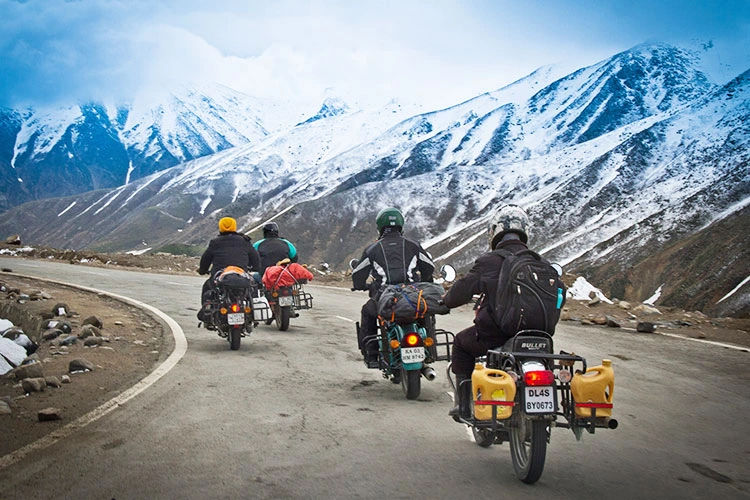
Next, you'll meet the motorcycle that will carry you across India. Take your time. Adjust the mirrors and levers, check the gear pattern, get a feel for the brakes and the weight. The mechanic will walk you through everything. On a Royal Enfield Himalayan 450 or Classic 350, the controls are standard, but every bike has its own personality.
Most tours include an easy warm-up ride, a gentle introduction to Indian traffic before the longer days begin. Don't rush it. Confidence comes quickly.
The group typically rides in a staggered formation: the lead rider at the front, riders alternating left and right of the lane behind, and the sweep rider at the back. Leave a safe gap to the bike in front, enough to stop if something unexpected appears (in India, it will).
If you want to ride more slowly, that's absolutely fine. The sweep stays with you, and the group regroups at regular stops. Nobody is racing. This is a tour, not a time trial.
Your tour leader will confirm these at the briefing, but the most common are:
If you have a problem, simply raise a hand or pull over safely. The sweep will stop with you.
A few reminders that make every day smoother:
For more, see our motorcycle travel guide to India.
Whether it's the desert heat of Rajasthan or the dry, thin air of Ladakh, you will lose more water than you realise. Drink often, even when you're not thirsty. Bottled or filtered water is provided on tour, with refill points at hotels and lunch stops. A rehydration sachet in the afternoon works wonders.
Indian food is one of the great joys of the trip, and with a little care your stomach will be happy too:
Your tour team chooses restaurants for hygiene and quality, and can arrange vegetarian, vegan or other dietary needs with advance notice.
The sun in India, especially at altitude, is strong. Wear high-SPF sunscreen, lip balm and sunglasses, even on cloudy days. In the Himalaya, temperatures can swing from freezing at dawn on a high pass to warm in the valley by lunchtime, so ride in layers you can easily add or remove at stops.
On high-altitude routes, take acclimatisation days seriously. Walk slowly, drink water, sleep well and go easy on alcohol. If you notice a headache, nausea, dizziness or breathlessness, tell your tour leader straight away. It's never a bother. There's oxygen in the backup vehicle and the team is trained to help.
Some of the best memories happen at unplanned stops: a roadside chai stall where the owner refuses to let you pay, a village wedding procession, a shepherd who wants a photo with your bike. Say yes to these moments. Your tour leader knows how to make time for them.
You'll want to photograph everything, and you should. But try, at least once a day, to simply stop, take off your helmet and look. The photos will remind you of the trip. The quiet moments will stay with you.
Rest days are not wasted days. On a Himalayan tour they help your body adjust to altitude; on any tour they give your mind time to catch up with everything you've seen. Explore a town on foot, visit a monastery, get a massage, write postcards or simply sleep in. You've earned it.
Most hotels offer a laundry service, usually returned the same or next day. Plan to use it on rest days or two-night stays. Quick-dry clothing and a few spare base layers make life on the road much easier.
Evenings are a big part of the magic. Once the bikes are parked and the mechanic is busy with his tools, the group comes together. A hot shower, a cold drink, a good meal and the day's stories: who saw the eagle, who conquered the water crossing, who got chased by a very determined goat.
This is also when your tour leader shares tomorrow's plan, so you always know what's coming. And it's when strangers turn into friends. Many riders tell us the evenings were as unforgettable as the roads.
You're a guest in India, and people will treat you like one, with curiosity, warmth and remarkable hospitality. A few habits go a long way: greet people with "Namaste" (or "Julley" in Ladakh), remove your shoes in temples and homes, dress modestly off the bike, use your right hand for giving and eating, and always ask before photographing people. For the full guide, read our article on The Norms of India.
It always comes too soon. On the final day there's usually a farewell dinner, a chance to thank the team, swap contact details and relive the best moments. It's customary to tip your crew (mechanic, support driver, sweep and tour leader) if you were happy with their work. It's entirely your choice, and always deeply appreciated.
The next morning, you'll be dropped at the airport. And somewhere on the flight home, between the in-flight meal and the first movie, you'll find yourself scrolling through your photos and thinking, Where next?
Riders who fall in love with India usually come back, and there's always more to explore:
See all upcoming departures on the 2027 motorcycle tour calendar, or contact our team to start planning your next adventure, or your first. We'll be here, with the chai ready.
Ride easy. Ride India.