We value your privacy
We use cookies to enhance your browsing experience, serve personalized ads or content, and analyze our traffic. By clicking "Accept All", you consent to our use of cookies.

India's Golden Triangle Tour covering Delhi, Agra and Jaipur is the most popular first trip to the country, and it's easy to see why. In one neat loop you travel through eight centuries of history: mighty Mughal forts, the incomparable Taj Mahal, rose-pink palaces, world-class bazaars and food you'll still be thinking about months later. The three cities sit a few hours apart by road, which makes them simple to string together. Here are the 15 stops we'd never let a first-time visitor miss- grouped city by city, with a practical tip for each.
Delhi — Red Fort · Jama Masjid & Old Delhi · Qutub Minar · Humayun's Tomb · India Gate Agra — Taj Mahal · Agra Fort · Mehtab Bagh · Fatehpur Sikri Jaipur — Amber Fort · Hawa Mahal · City Palace · Jantar Mantar · Nahargarh Fort · The Bazaars
India's capital is where most international trips start: a layered, fast-moving city where Mughal monuments, wide colonial avenues and frenetic old bazaars sit side by side. Give it at least a full day, ideally two.
Shah Jahan's mighty red-sandstone fort was the seat of Mughal power for two centuries and is now a UNESCO World Heritage Site. Walk in through the towering Lahori Gate to the palaces and pavilions within. Tip: this is where the Prime Minister addresses the nation every Independence Day.

India's largest mosque, completed in 1656, with a vast courtyard that holds tens of thousands of worshippers. Climb the southern minaret for rooftop views, then plunge into the lanes of Chandni Chowk by cycle-rickshaw for legendary street food. Tip: dress modestly-cover your shoulders and knees.
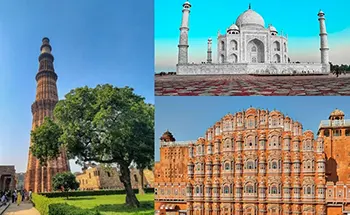
A soaring 73-metre victory tower from the 12th–13th centuries, the tallest brick minaret in the world and another UNESCO site. The surrounding complex holds the famous Iron Pillar, which has resisted rust for over 1,600 years.
The first great Mughal garden-tomb (1570s)- all red sandstone and perfect symmetry and the architectural blueprint that, decades later, led to the Taj Mahal. It's UNESCO-listed and far calmer than Delhi's busier sights. Tip: it's beautiful in soft late-afternoon light.
A 42-metre war memorial standing at the head of Delhi's grand ceremonial boulevard, flanked by stately government buildings and the presidential palace, Rashtrapati Bhavan. Tip: come at dusk, when the monument is lit and the lawns fill with families.
Around three to four hours from Delhi (or a quick express train), Agra is home to the monument you came to India to see and two more that would be headline sights anywhere else.
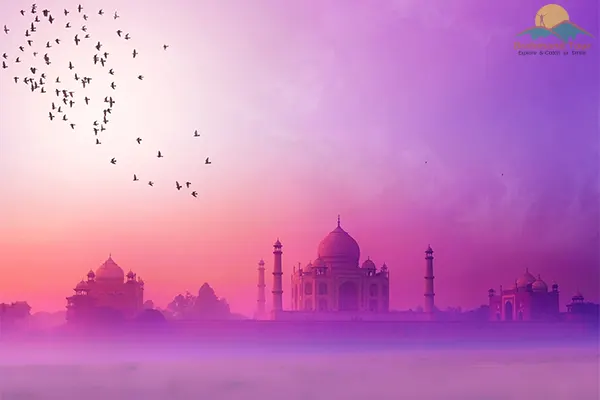
Shah Jahan's white-marble mausoleum for his beloved wife Mumtaz Mahal, completed around 1653- arguably the most beautiful building on earth and one of the New Seven Wonders of the World. The marble shifts colour with the light through the day.
Tip: go at sunrise for soft light and the thinnest crowds and remember the Taj is closed every Friday.
A vast red-sandstone fort and palace complex, also UNESCO-listed, from which an ageing Shah Jahan imprisoned by his own son could gaze downriver at the Taj he had built. The views from its marble pavilions are superb.
The "Moonlight Garden" sits directly across the Yamuna River from the Taj, offering the classic postcard view at sunset- the marble glowing gold and mirrored in the water- well away from the main crowds.
Emperor Akbar's beautifully preserved red-sandstone capital, abandoned after just 14 years for want of water, and entered through the colossal Buland Darwaza gateway. Tip: it sits right on the road to Jaipur, so visit it en route rather than as a separate trip.
🛣️ Bonus stop on the road to Jaipur — Chand Baori (Abhaneri): a short detour brings you to one of India's oldest and deepest stepwells, around 3,500 steps descending in a mesmerising geometric pattern. Worth every minute.
The capital of Rajasthan is a riot of colour, royal palaces, hilltop forts and the best shopping on the entire circuit.

The spectacular hilltop fort-palace just outside the city, with its dazzling mirror-inlaid Sheesh Mahal and sweeping ramparts- part of the UNESCO Hill Forts of Rajasthan. Tip: arrive early to beat both the heat and the crowds.
The "Palace of Winds"- a five-storey pink-sandstone facade of 953 latticed windows, built so royal women could watch the street below unseen. It's the single most photographed sight in Jaipur.
Tip: the best light is early morning, shot from the café terraces across the road.

The still-inhabited royal residence: a sprawl of courtyards, museums and the elegant Chandra Mahal, blending Rajput and Mughal design. Part of it remains home to Jaipur's royal family.
An astonishing open-air observatory of giant stone instruments built in the 1730s- including the world's largest stone sundial, accurate to within seconds. UNESCO-listed and genuinely unlike anything else on the trip.
Perched on the Aravalli ridge above the city, this is the place to watch the sun set over a pink-tinged Jaipur- a perfect, peaceful end to a day of sightseeing.
Finish the Golden Triangle the way locals would- shopping. Hunt for gemstones and jewellery in Johari Bazaar, textiles and embroidered jutti slippers in Bapu Bazaar, and lac bangles in Tripolia.
Tip: haggle politely, and buy gemstones only from reputable, fixed-price stores- never from a "special deal" a stranger steers you toward.
The Golden Triangle works best over five to six days- enough to enjoy each stop without spending your whole trip in the car. A classic flow is two days in Delhi, two in Agra (with Fatehpur Sikri en route), and two in Jaipur, looping back to Delhi to fly out.
Travelling with a private driver and guide takes the stress out of the logistics- the early Taj sunrise, the right timings, the drive stops, and steering you clear of the tourist traps. Our Golden Triangle tour package covers all 15 of these stops and is fully customisable to your dates and pace.
How many days do you need for the Golden Triangle?
Five to six days is ideal. You can do it in three, but you'll spend most of that time driving between cities- slower is far more rewarding.
What's the best time of year to plan Golden Triangle Tour in India?
October to March, when the days are warm and clear and the evenings pleasant. Avoid the fierce heat of May–June, and note that December–January mornings can be foggy.
Is the Taj Mahal open every day?
No- the Taj Mahal is closed every Friday. Plan your Agra day around that, and aim for a sunrise visit.
Can we do Golden Triangle Tour on Motorcycle?
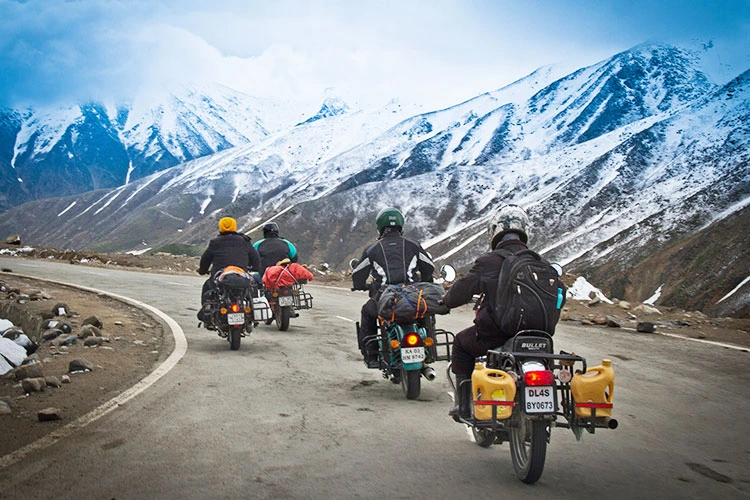
Yes, you can also plan Golden Triangle Motorcycle Trip to explore heritrage and forts of North India with adventure.
Can the route be customised or extended?
Yes. The Golden Triangle pairs easily with extensions to Ranthambore for tigers, Udaipur's lakes, Varanasi, or onward to the Himalayas- just tell us what you'd like to add. Browse our Golden Triangle Extended tour packages →
Tell us your travel dates and what you'd love to see, and we'll plan a private, tailor-made Golden Triangle trip around you- with an honest, all-in quote and a guide who knows every one of these stops inside out.
Plan my Golden Triangle trip → Or message us on WhatsApp at +91 95600 22171.